Published: 28 Aug 2024
Last updated: 26 Sep 2026
Myst (Masterpiece Edition)
- Developed and Published by: Cyan
- Released on: 1993 (as Myst), 1999
- Genres: Point-and-click-Adventure, Puzzle
- Rating: 4/5
- Originally written: ~30th December 2023
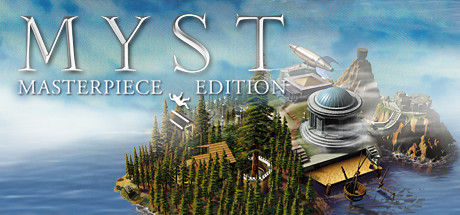
A very beautiful and very enjoyable puzzle game. Perhaps a bit clunky to move around (making copious notes will help!) and was occasionally tripped up by the movement clunkiness, but the puzzles themselves never really did (although that underground maze did suck!), once you got past the first few you intuitively build up an expectation of how a puzzle may look like, what may be clues etc. and it never really drifts from that intuition, even if again inputting the solution was clunky.
The different worlds/ages and general atmosphere/ambience is just absolutely fantastic, and is really a great incentive to stick around, stay immersed and get those puzzles solved.
If this is just a warmup to Riven, I’d better plan to play it sooner rather than later.
Riven: The Sequel to Myst
- Developed and Published by: Cyan
- Released on: 1997
- Genres: Point-and-click-Adventure, Puzzle
- Rating: 4.5/5
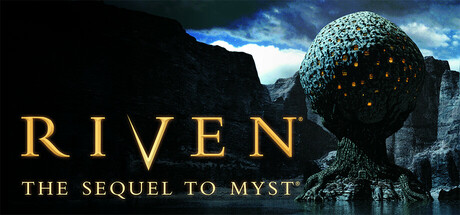
On the surface, Riven may “just” be a sequel to Myst with some extra graphical fidelity - you’re dropped into an island once again with little backstory and no obvious goals, with plenty opportunity to explore and interact with many mechanical contraptions scattered throughout. But for all of Myst’s innovation, influence and mystical environment - both the worldbuilding and the puzzles feel a little rudimentary - the design of Myst’s ages are often radically different and take a “whatever goes” approach while the segmented ages split the puzzles of Myst into small and manageable chunks, and once beyond the veil of Myst’s deliberate obtuseness, rather simple all-in-all. Riven, by contrast, pushes the integration between the environment and puzzle far beyond Myst’s wildest dreams - effectively turning the game into something more approaching a full anthropological expedition of an alien civilization.
This anthropology angle makes for an incredible slow burn, a deliberately slow and methodical pace guided by the sprawling mass of locations whilst providing a slow drip-feed of information to puzzles yet to be discovered, manifesting in sounds, symbols, visuals, scrawled notes and the very real, very living ecosystem of Riven and its inhabitants - and you must immerse yourself into the world created to have any hope of understanding Riven and the few puzzles within. Whilst Myst was eerie in its sheer lifelessness and didn’t care for your presence, in Riven you are constantly getting the feeling of being watched by the denizens with… suspicion? fear? Its unknown exactly, but there’s clearly more going on than the emptiness of Myst, and being told repeatedly that the age of Riven is slowly falling apart gives a sense of urgency and importance to uncovering the isles’ mysteries.
Leaving the immaculately designed atmosphere and environments to one side, its worth looking at how simple the goals outset to ‘beat’ Riven are: save Catherine, trap Gehn, signal Atrus. To actually achieve this however, requires fully exploring the island (a major undertaking in itself), learning and deriving key facts about the world’s cultures, and finally deducing the nature, location and solution to the few puzzles presented with all of Riven to pull from for clues. Its very ambitious and… almost works entirely, but not quite. Most of my trouble with actually completing Riven came from missing an interactable object/magic screen to either continue progressing exploration or pick up a clue. I chalk this up to the limits of the point-and-click interface since it happened with Myst as well, although the more constrained puzzle nature meant you could quickly intuit whether you were “missing” something, whereas Riven’s sprawling nature makes no such concessions and gives you plenty freedom to drive yourself mad running in circles due to missing an inconspicuous lever. This continues in a similar vein onto the puzzles themselves given there’s not much “clue redundancy” and also deliberately withholds some information back for you to infer from all the other previous deductions you’ve made - none of this is bad in concept and making connections one-by-one to break the puzzle down chunk-by-chunk is incredibly rewarding, but there’ll almost certainly come a time where you’re either missing one last clue or need to make one final “leap of logic” that the game has done so well to avoid requiring up until that point.
Above all though, all my complaints and analysis comes through from a truly deep appreciation for Riven and what it is trying to achieve, especially as it flirts with perfection. Myst was also interesting to revisit in a historical sense, and I was impressed at how well it held up, but ultimately that is “just” a puzzle game - Riven is an entirely different beast, and all the more better for it.
Myst III: Exile
- Developed by: Presto Studios
- Published by: Ubisoft Entertainment
- Released on: 2001
- Genres: Point-and-click-Adventure, Puzzle
- Rating: 3/5
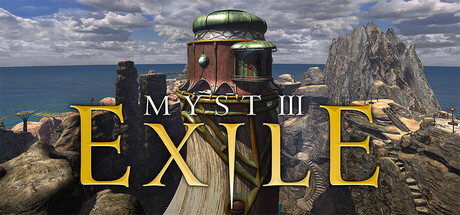
Myst 3: Exile is a bit of a strange beast that I struggle to make my mind on in the context of the Myst series as a whole. Viewed literally, Exile is effectively a re-tread of original Myst in all aspects, but especially the pacing and structure of the game which sees you tasked with fetching a stolen MacGuffin in the form of a Linking Book, which requires solving puzzles in three distinct worlds connected by a central hub whilst you learn about how, once again, Atrus’ sons Sirrus and Achenar despoiled the ages they visited with their greed. Only this time, instead of being told through context clues and scraps of lore, its all explicitly laid out by main antagonist Savvedro who is this games’ incarnation of Gehn (and one of the few aspects this game borrows from Riven instead). The puzzles themselves are also fairly standard Myst fare, but there is a greater emphasis on atmosphere, adventure and cinematics all bolstered by the new 360-view, pseudo-free look effect applied to the static images and more budget given to an increased amount of animations throughout (Amateria being a standout) - its a double-edged sword that accentuates the highs (exploring the ages’ lush scenery in all its glory, the feeling of satisfaction while the cutscene plays that solve the age) but also the lows (harder to create a mental map and much easier to get lost, increased animation means increased timelag for puzzle feedback loops), and ultimately due to impeding the puzzle-solving process the cons outweigh the pros.
Delving into the levels themselves, a lot of them are consistently inconsistent in their design: Beginning with the hub world which does a great job introducing you into the world and setting expectations via rudimentary puzzles, but unlocking the other ages themselves was asinine (and reminded me at how opaque Myst was initially at hinting how to unlock the other ages via tower rotation). Amateria is likely the best age here both puzzle-wise and aesthetically, but the process of solving is painfully slow due to having to sit through so many cinematics to check if the rube goldberg machine you construct is finally solved or not. Edanna is lush and beautiful, but extremely easy to get lost (primarily due to the free cam), extremely linear with few puzzles that exist are a little nonsensical even by bad Myst puzzle standards. Voltaic is fine?, its relatively short, visually distinct and quite-straightforward by Myst age standards, but makes “up” for its shortness by making inputting said puzzle solutions extremely time-consuming.
The game clearly is a direct “Myst” sequel in every sense (in a way Riven was plainly not), and suffers in a myriad of ways by not being quite as good as the original Myst, both in the puzzle-design but also in its presentation and characters - the fact that the ages are canonically “toy projects” designed to teach Atrus’ sons rather than long dead worlds strips a lot of mystique that Myst originally garnered, and while Brad Dourif puts in a fantastic performance as Saavedro for what he’s given, “outsmarting” him (who, while consumed by hate, has legitimate grievances) pales in comparison to the mastermind villain Gehn, merely for the fact that we’ve seen it all before. …And yet for all my negativity, Myst 3: Exile is still demonstrably a Myst game, and due to the circumstances of not being developed by Cyan and instead external developers Presto - it is clear they have reverence for the series as a whole and ends up being very faithful, if safe, sequel, and is still a positive addition to the Myst canon.
Uru: Complete Chronicles
- Developed by: Cyan
- Published by: Ubisoft Entertainment
- Released on: 2003 (as Uru: Ages Beyond Myst), 2010
- Genres: Point-and-click-Adventure, Puzzle, “Dead MMO”
- Rating: 1.5/5
I scarcely have been so baffled by a game’s premise/concept so much - but the idea turning Myst from a single player, 1st person, pre-rendered environment game into a 3rd person, real-time rendered MMO complete with a physics engine to boot is just as confusing after finishing URU as it was when I first heard about it. Uru’s lifespan as a video game is not much less confusing than the concept itself, with the MMO/Online portion having a troubled development cycle/lifespan, and the single-player version existing as a publisher’s “contractual obligation/demand” to have something playable released. Already we’re off to a bad start, pretty significantly compromising on Cyan’s clearly ambitious original vision in actually playing the damn thing.
Aesthetically, Uru doesn’t actually suffer too much from this abandoned-MMO feeling because Myst as a whole thrives off of these strange alien worlds (although Uru also ties this to the modern day world in a few spots, which ruins the magic a little), but everything else the game suffers from is clearly downstream from this Frankenstein single-player-game-derived-from-a-MMO creation, unfortunately. The tank controls are abysmal, and only partially remedied by the 1st person mode. The “find 7 Journey Cloth” system in each age is uninspiring. The puzzles are, by far, the worst in the series (with Kadish Tolesa and Eder Gira/Kemo being notable low-lights in certain areas - the fireflies puzzle gets all the ire but there are many others that are nonsensical without picking up obscure hints, if they are given at all), with many designed in such a fashion to be reliant on many people to brute-force solutions. Even Yeesha, the “prophetic guide” is irritating, mainly due to the sharp-right turn that Uru makes towards pure mysticism, and so we hear a lot of poetic flowery nonsense (which itself couches inconspicuous hints, another point of frustration) as you complete. After the initial shock of “what the hell did Cyan make?” I did truly want to warm up to this, and in some aspects I did (learning about the D’ni themselves throughout the ages was novel and demonstrated Uru could still do competent environmental storytelling), but trudging through Kadish Tolesa and Eder Gira/Kemo, combined with all the other ever-present issues, reverted me back to my initial sour state of the game. Ultimately I see Uru as nothing but an unsuccessful experiment, something weird enough to “deserve” (?) a cult following of sorts, a historical curiosity that should be inspected and dissected from afar - as all of that is far more interesting and enjoyable than trudging through the game itself. A shame really.
Myst IV: Revelation
- Developed by: Ubisoft Montreal
- Published by: Ubisoft Entertainment
- Released on: 2004
- Genres: Point-and-click-Adventure, Puzzle
- Rating: 1/5
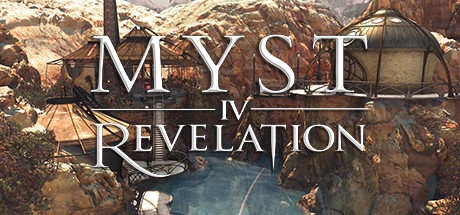
Myst IV: Revelation is another Myst sequel not developed by Cyan (still busy with Uru), and with Presto Studios folding, it would turn to Ubisoft themselves to develop and instead of trying to play it safe once again (with Exile), we instead get a extravagant, big-budget, AAA-game development take on the Myst formula (i.e. more voice and FMV acting, more scripted sequences and cutscenes, a general sense of bombasticity, and a Peter Gabriel cameo?!). Considering what the Myst games are, this sounds, and is, a terrible direction for the franchise.
There’s a lot of negatives to comb through, so I’ll quickly rattle through the positives. Firstly, the budget/AAA-treatment does provide some extra-beautiful environments, atmosphere and general visual immersion that no other Myst game has been able to achieve - and I’ve always liked the FMV aspect to Myst, regardless of quality, and there’s more than ever before on offer here. Furthermore, I did like the return of journal usage for hints of certain puzzles, and there were a few QoL features I liked such as the in-game camera/screenshot tool for reviewing puzzle hints found throughout. Finally, out of all the ages, Spire was undoubtedly the best both in looks and in the puzzle design, while Tomahna is a pretty good introductory age in its own right.
However, the negatives truly are numerous and fundamental. For a Point-and-Click Adventure Puzzle game to have movement and navigation this painfully sluggish (both in moving to new screens, as well as the slow cursor animations per screen), to make the very concept of exploring (and then subsequently re-exploring to collate puzzle hints) a chore is frankly unforgivable in itself, but it also severely dampens the puzzle solving process by making the collation of hints painful as well - and no, the “Zip Mode” really doesn’t help. Unfortunately, even excluding the painful movement, the puzzles are also the worst in the series by far - some are just uninspired design, some are poorly explained (if at all), while others are just horrendous to actually input the solution, and the ratio of bad to “acceptable” puzzles is simply too high not to notice - the Haven Jungle area, the Haven Camoudile Puzzle, the… whole of Serenia (especially the “Dream” puzzles), its a significant chunk of the game. A few of these puzzles are even time-based as well, something never before seen previously in any other Myst game, and for good reason.
Finally, the over-arching plot is… fine? We once again pull back from the original Myst (with some ret-conning to boot around the Prison Books), revisiting Atrus and his two sons’ Sirrus and Achenar once again (with Yeesha now in tow), this time in their prison worlds, with the setup being some simple red-herring-esque tasks while Atrus conveniently disappears for the rest of the game. There we visit Sirrus’ and Achenar’s prison Ages (Spire and Haven, respectively) and learn about their time spent there, both through personal journals and environmental storytelling. A reasonable start (and if you squint, I think you could read into the prison system and rehabilitation given the start contrast of the prison Ages), however it severely derails when heading to Serenia, and we get an awful plot of Sirrus attempting to assume the identity of Yeesha via memory and body swapping to trick Atrus into teaching him the art of writing Ages? Its both terribly cliche, not in-keeping with Myst at all but also frankly incoherent as a plot device (Sirrus was already in prison when she was born and had only seen her a few times, how was he planning to be a convincing imitator?), and its all this nonsense that really detracts from what could have been a decent, if tired at this point, retread back through the original Myst.
I think there is plenty more that could be discussed, such as how the game attempts to be immersive graphically yet has produced a navigation and control system so clunky it ruins any and all potential for ‘proper’ immersion, or whatever the hell Serenia/Dream is and taking the form of what I could only describe as “New Age nonsense”, as well as the fact that there’s an unskippable ~3 minute “cutscene”/music video featuring a Peter Gabriel song (which wasn’t even written for the game itself, and so is incongruous with everything else). Funnily enough, Peter Gabriel actually puts in a stellar performance and is one of the few highlights when visiting the “Dream-world”, but its one of many baffling decisions that this game makes. Above all this very mixed bag however, is the simple fact that Revelation fails, both in its ambition to spice up the Myst formula, but also the much more meagre ambition of just being a competent Myst sequel. The rest, while interesting, is merely window dressing.
As a side note, while researching around the slow movement transitions, that there does exist a mod that greatly speeds these transitions up (named Myst IV: Revolution) - and there is a fantastic technical writeup (see part 1 and part 2) outlining these slow transition times, and some of the code suggests that the slow loading derived from a change in architecture under the hood, driven by limited DVD space, and the fade-in/out for transitions was designed as a complement for these slow transitions. Its a fascinating read, and while I have no intention of ever revisiting Revelation, given this is almost everyone’s no. 1 complaint about the game, I would be curious how much more positively received this game would be without its crippling downside of slow movement.
