Published: 22 Aug 2026
- Release date: 1978 (1985 for first English translation)
- Genre: Non-fiction, Philosophy, Politics, History
- Themes/Moods: Slow-paced, Reflective, Informative, Inspiring, Challenging
- Rating: 4/5
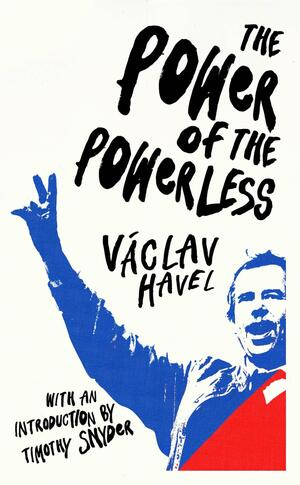
This book was something I’d always had my eye on, but was unsure how much relevance it would hold in the modern age - something quickly dispelled when Mark Carney used the prominent “greengrocer” analogy at Davos applied to the changing world today, and really piqued my interest. That event aside, while The Power of the Powerless is steeped in its 1970s Soviet Czechoslovak history, it is surprisingly agnostic of the USSR system as a whole, instead using it as a frame-of-reference to define many terms such as “post-totalitarian”, “dissident”, “opposition”, and “ideology”, all terms that Havel makes great pains to outline systematically in discussions that makes it all that much easier to transpose effectively to modern-day politics. Yet despite potentially sounding like a tedious political manifesto, Havel is remarkably eloquent and his background as a playwright shines through in his writing.
One thing to make clear though is also how this is not prescriptive on what to do politically, outside of a few aphorisms such as “living within the truth” and “A better system will not automatically ensure a better life. In fact, the opposite is true: only by creating a better life can a better system be developed” - partially due to the context of when this was written, it is unsurprising that Havel is suspicious of grand overarching “ideology” and systems as a whole (and in fact, extending his wrath to technology to automation, something extremely prescient) - but also due to his long-held belief that societies and organisations as a whole should as dynamic, organic and as descriptive as possible rather than any one overarching prescriptive system. Ideology and society should serve its people rather than vice-versa, and Havel is again prescient enough to not blindly trust traditional parliamentary democracy as the best blueprint for societal organisation, preferring to outline, albeit extremely vaguely, the concept of a “post-democratic” structure. It is not a political manifesto, it is not solutions-orientated, but that is entirely the point (even if it a little disappointing nonetheless).
Outside of the famous greengrocer analogy, which is fantastic, there is also plenty more within the book around societies and political systems as a whole. Some of this is very much rooted of its time, such as the origin of Charter 77 and the stirrings of internal reform that were crushed by the 1968 Prague Spring, as well as, in some vein, the discussion around the West’s misunderstanding on dissidents and the concept and role of opposition in a political environment where there can be no opposition in the “traditional” sense - but again others can be applied much more generally, such as the outline of ideology of being the “glue” that can hold a power structure together, existing as a bridge of communication between the system and the people and requiring buy-in (either willingly or not) and the concept of a “second culture”, underground/parallel organisations as being a requisite when rebelling against a “post-totalitarian” system as a means to either replace or positively augment the current system as a form of subversion. Havel does much of the legwork in these definitions and demonstrated examples that it becomes easy to branch out and start thinking about how to apply many of the ideas in the real world - I’d be wary to say that everything that Havel asserts applies but many of them are simply putting into words something I’ve either seen or thought about in much more elegant fashion, and for that alone The Power of the Powerless is an invaluable read.
